
Gold Mineral Property Overview
LODI MINING DISTRICT, LODI HILLS, NYE COUNTY, NEVADA
The Lodi Mining District, established in 1875 following the discovery of gold at the Illinois mine, experienced cycles of boom and decline from its inception through the mid-20th century, ultimately producing $1.3 million in ore.
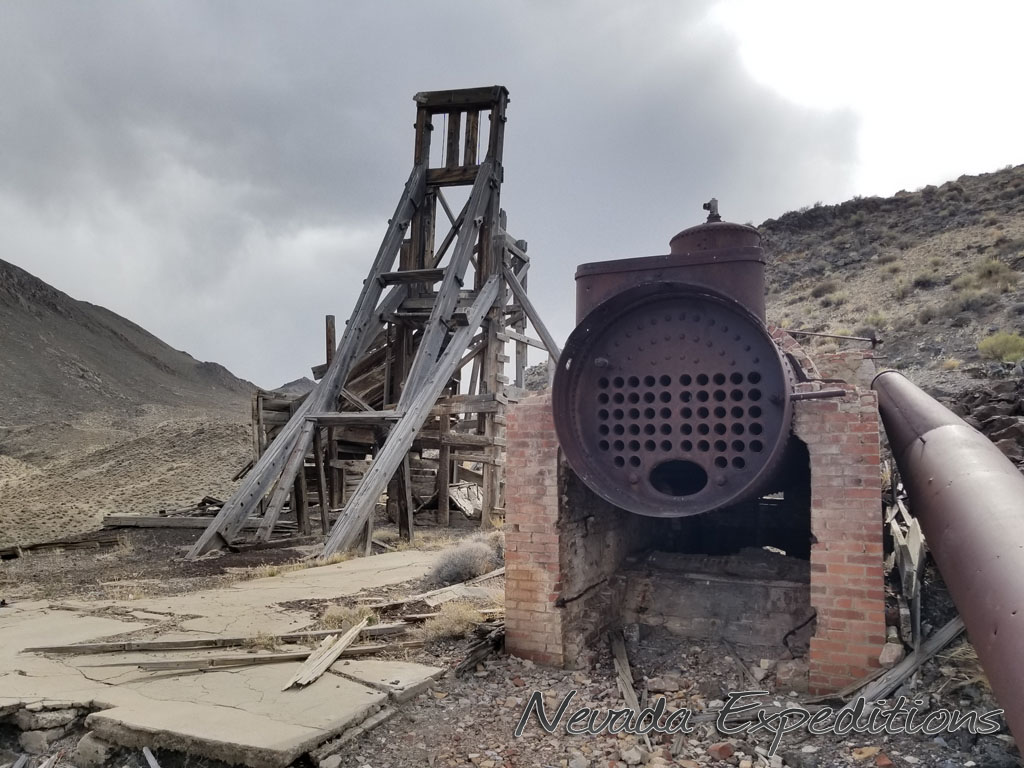
Lodi Mining District History
Early Discoveries and Development
In 1874, gold was discovered at the Illinois mine by Alfred Welsh and John Kirkpatrick. On May 14, 1875, the Lodi district was organized. Shortly thereafter, a ten-ton smelter was constructed by William Raymond of the Raymond & Ely Mining Company in Pioche. A 1,000-foot shaft was also sunk at the Illinois mine. By 1877, the Argent Mining Company opened three additional mines: Los Angeles, Sand Mound, and Downey. By 1878, Lodi boasted a general store, blacksmith shop, saloon, boarding house, and a population exceeding 100.
Financial Troubles and Decline
In 1879, the Argent Mining Company faced severe financial difficulties, resulting in the auction of its personal property. Although the company managed to retain its mines until 1881, they were eventually auctioned off. The Illinois mine, which had produced $400,000 in ore, closed in 1880. By the end of 1881, only six men remained in the Lodi district to work the 25 claims, including Alfred Welsh. In 1887, Welsh purchased the Argent company’s holdings but continued to focus on the Illinois mine. His life ended in November 1891 when he was shot by his brother over a $16,000 debt. The Illinois mine became idle and remained so until Timothy Phelps purchased it in 1893, though it saw no activity until the next century.
20th Century Revival
In 1905, new gold discoveries sparked renewed interest in the Lodi district. Three separate camps were established: Marble at the Illinois mine, Bob to the east, and Lodivale at Lodi Tanks, 2½ miles across the valley. Lodivale grew rapidly due to an ample water supply, resulting in the opening of numerous saloons and stores. A post office was relocated from Phonolite to Lodivale on July 23, 1909, but it closed on August 25, 1910. Meanwhile, Bob developed its own amenities including a hotel, restaurants, saloons, and a red-light district.
By 1909, the Illinois mine reached the 1,060-foot level with over 4,000 feet of drift work. The Lodi Mines Company hauled ore to the railroad in Luning and erected a 100-ton smelter in June, which was abandoned after little more than a month due to the high cost of hauling ore, leading to the company’s bankruptcy. In May 1911, all properties were sold to the Adaven Mining and Smelting Company, which continued developing the mine until it flooded in 1914. The White Pine Mining Company took over in 1915 but also failed, and Chauncey Burt, the original owner of the Lodi Mines Company, reacquired the properties. The camps continued to struggle until the Marble post office closed on December 15, 1917.
Later Developments
After an unsuccessful experimental concentrator in 1919, the district remained quiet until 1921 when the Illinois Nevada Mines Corporation purchased the Illinois mine. Workers Hughes and Hatterly discovered gold just south of the mine, leading to quick production. A 40-horsepower hoist was installed, and miners focused on the higher levels of the mine. The company also built a six-mile water pipeline from Marble Falls Canyon, ensuring a surplus water supply.
The Illinois Nevada Mines Corporation operated the mine until 1928. The last business in the district, the Archibald boarding house at Lodi Tanks, closed in 1929. Despite a brief revival in 1940, the district has remained largely inactive since then. Chauncey Burt, who maintained faith in the Illinois mine, stayed in Lodi until his death in 1951, with his ashes scattered at his mine. As of the 1980s, the mine remained in the family, with the total production of the Lodi district amounting to $1.3 million.